

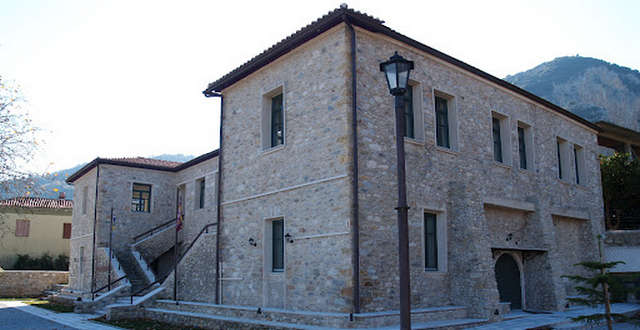
In a significant blow to the cultural heritage of the region, the Chamber of Lakonia has expressed deep concern over the potential cessation of operations at the Institute for Byzantine Culture Research (IN.E.VY.P.) in Sparta. This institute, established in 2007 under the auspices of the University of the Peloponnese, has become a vital center for the study of Byzantine culture, particularly focusing on the historical significance of Lakonia and Mystras.
In a letter addressed to Prime Minister Kyriakos Mitsotakis and Minister of Education, Religion, and Sports Sofia Zacharakis, President Ioannis Panaritis emphasized the necessity of maintaining the institute. He pointed out that it is one of the few specialized research centers in Greece dedicated exclusively to Byzantine culture. The potential closure of IN.E.VY.P. would not only diminish academic presence in the region but also weaken the connection between Sparta and its Byzantine history.
The institute has been instrumental in organizing international conferences, seminars, and research programs, attracting scholars, postgraduate students, and cultural tourists. Its closure would have far-reaching economic implications, as it draws visitors who contribute to local businesses, including accommodations and dining establishments.
Academically, IN.E.VY.P. serves as a crucial «bridge» that sustains university activity in Lakonia. It hosts postgraduate programs and collaborates with both Greek and international institutions. The dismantling of this institute could lead to a further concentration of academic resources in larger cities, thereby undermining regional development and limiting opportunities for emerging researchers in Lakonia.
According to the founding decree, the institute was established for a duration of 20 years, and recent legislative changes indicate that its continuation requires formal actions from the University of the Peloponnese. However, there have been delays in appointing a governing board and director, raising concerns about the future of the institute. This situation mirrors previous instances where educational institutions were relocated, prompting questions about the commitment to regional educational infrastructure.
The letter urges immediate action from the government to ensure the smooth operation of IN.E.VY.P. as a non-profit entity, highlighting the rich historical legacy of Sparta and Mystras. The preservation of such cultural institutions is vital for maintaining the historical narrative that connects the Byzantine past to the present.
In conclusion, the community of Lakonia is calling for swift interventions from the authorities to address these pressing concerns. The future of the Institute for Byzantine Culture Research hangs in the balance, and its fate will significantly impact the cultural and academic landscape of the region.