

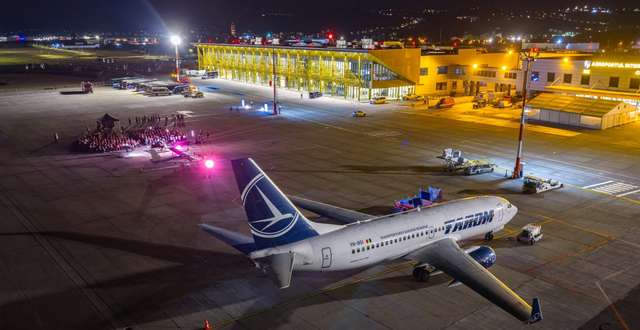
In a central hotel in Athens, the dynamic growth of Cluj International Airport “Avram Iancu” (CLJ) in Romania was presented, highlighting its increasingly close strategic, economic, and tourism connections with the Greek market. This airport serves as the main gateway to the historically and economically developing region of Transylvania, recording impressive performance metrics and significantly expanding its flight network.
A Journey of Steady Growth and Success
Since its establishment as a civil airport in 1932, Cluj International Airport has transformed into Romania’s leading regional airport and the second largest in the country, following Bucharest’s Otopeni Airport.
Record Passenger Traffic: The year 2025 marked a milestone, with the airport welcoming 3.58 million passengers, reflecting a 10% increase from the previous year, and recording over 30,000 aircraft movements.
International Recognition: Its exceptional trajectory was underscored by being awarded the title of Best Airport in Europe (in the category of under 5 million passengers) by ACI Europe for 2021.
Ambitious Future: Projections indicate a steady upward trajectory, aiming to reach the milestone of 10 million passengers by 2045.
Greece in Focus: Routes and Tourism
In 2025, over 101,300 passengers traveled to and from Greece, placing the country among the top three tourist destinations from Cluj.
For 2026, the airport offers a total of 12 routes to Greece, including 5 scheduled flights and 7 charter flights, connecting Transylvania with:
- Athens (New route with Animawings)
- Thessaloniki (New route with Animawings)
- Crete (Heraklion and Chania), with Heraklion being the most popular Greek destination, attracting 38,300 passengers in 2025.
- Corfu, Zante, Rhodes, Skiathos, and Lesbos.
This enhancement is supported by the expansion of Wizz Air, which accounts for 56.1% of the airport’s total traffic, as well as the introduction and growth of new airlines.
Strong Economic and Cultural Ties
Air connectivity is fueled by deep economic relations between the two countries. Currently, over 2,000 Greek companies operate in Romania, with investments reaching €4.2 billion and an annual turnover of €5.8 billion, supporting more than 20,000 jobs in critical sectors such as energy, construction, banking, technology, and retail.
Simultaneously, Cluj-Napoca is emerging as a cultural capital and entertainment hub in Romania, hosting over 100 festivals annually. Among these, the world-renowned Untold music festival (with 427,000 attendees in 2025) and the Transylvanian International Film Festival (TIFF) attract thousands of tourists and offer significant opportunities for visitor exchange.
World-Class Infrastructure
The airport features a modern 2,040-meter runway and upgraded departure and arrival terminals. To support its growth, a major modernization program is underway. Current development projects (2025–2031) include further runway expansion, the construction of a new passenger terminal, new aircraft parking areas, and the establishment of a photovoltaic park for sustainable energy support.
This information reflects the status as of July 1, 2026, and may not encompass the latest developments.