
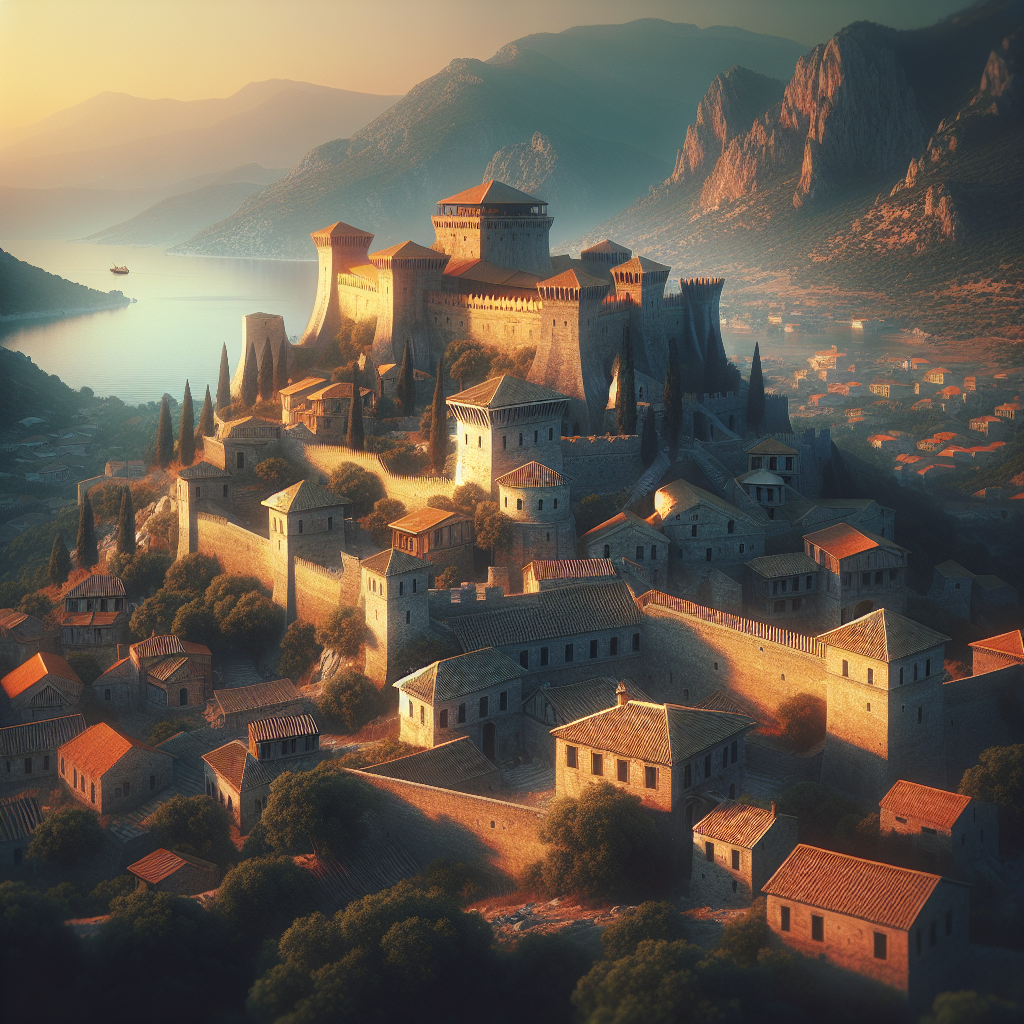
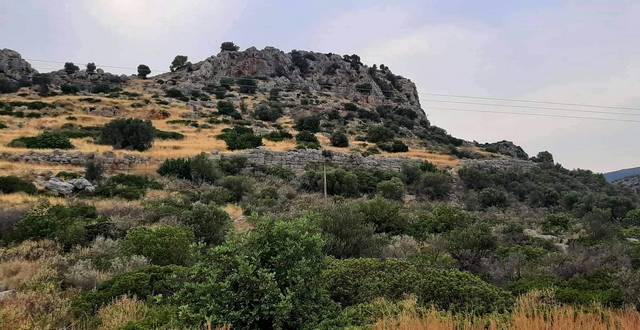
The Kastraki (Fortress) served as the Acropolis of the ancient city of Epidaurus Limiras, strategically located on the side facing Agios Ioannis Monemvasias. Travelers heading from Monemvasia to Geraka will encounter this historical site approximately one kilometer from the junction at Agios Ioannis, on their left, just before reaching the sea.
This ancient city, dating back to the Mycenaean period, is documented in historical texts, including Pausanias’s «Laconics.» It is said to have been founded by inhabitants of Ancient Epidaurus in the Argolis region, who, while sailing to Kos, witnessed divine signs that compelled them to disembark. They settled there, cultivating olive trees and initially constructing the temple of Asclepius, followed by the city with its temples and artistic works that flourished during the Roman era. Notably, it was one of the 18 cities of Laconia (the League of Free Laconians) that enjoyed complete autonomy. This fortress provided protection to the city’s inhabitants and the surrounding area from enemies, both land and sea.
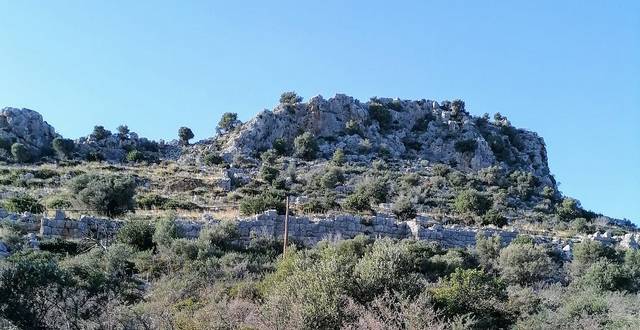
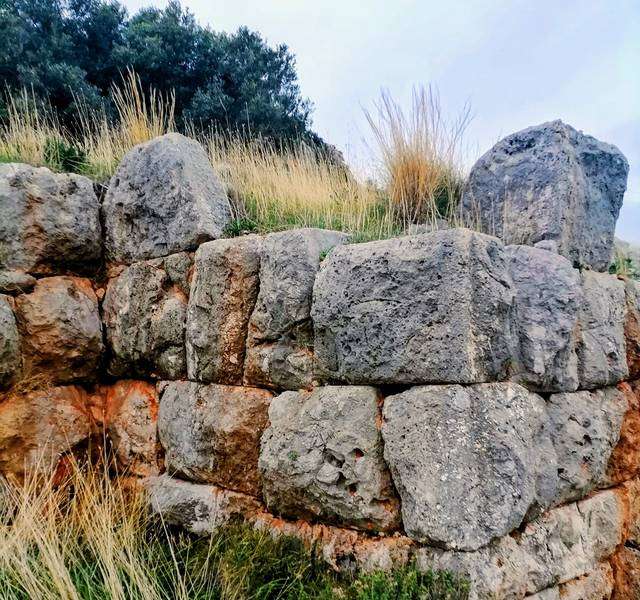
Visitors are often struck by the Cyclopean Walls, a testament to the engineering prowess of that era. Historical evidence suggests these walls were constructed around 470 BC, consisting of massive stones meticulously shaped and stacked without additional building materials, particularly on the seaward side. This construction technique rendered them nearly indestructible, resilient against the passage of time and the ambitions of would-be invaders, who could only dream of creating such formidable structures. Similar Cyclopean walls can be found in ancient Mycenaean cities like Mycenae and Tiryns.

During its history, the city was under the alliance and protection of Sparta, which led to its destruction by the Athenians twice during the Peloponnesian Wars.
Visitors passing through should consider stopping and taking the rural road to ascend the fortress (from the side facing Agios Ioannis) to encounter the remnants of the city, including ancient temple ruins, the temple of Aphrodite, and the sanctuary of Asclepius, which, according to Pausanias, housed a statue.
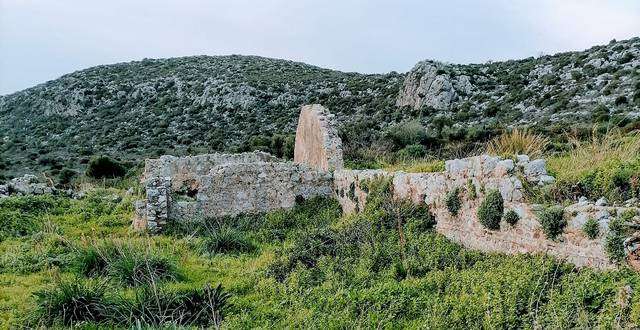
Notably, the impressive structure with arches on the left side as one ascends was once the Roman Baths, which included two reservoirs. This building was located where the western walls of the fortress once stood, parts of which still remain today. In line with this building (toward the sea) are the ruins of other structures. According to Pausanias, atop the Acropolis stood the temple of Athena. Visitors will also notice that some sections of the Acropolis have been carved, possibly to extract stones for the construction of the walls.
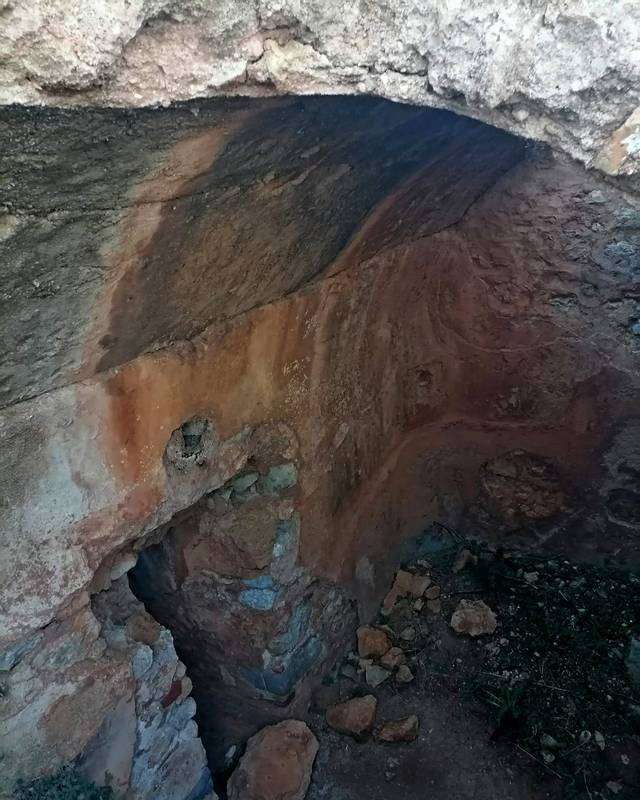
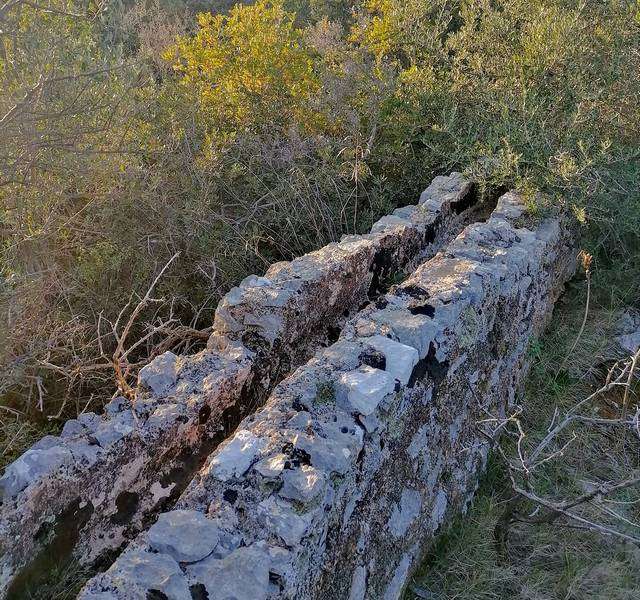
Below the Acropolis, toward the sea and within the walls, lies a large reservoir that collected rainwater and was also supplied by the «Stasou» spring. Unfortunately, historical records indicate that during the Byzantine era, the inhabitants of Monemvasia caused significant destruction to the remaining parts of the city, repurposing them as building materials.
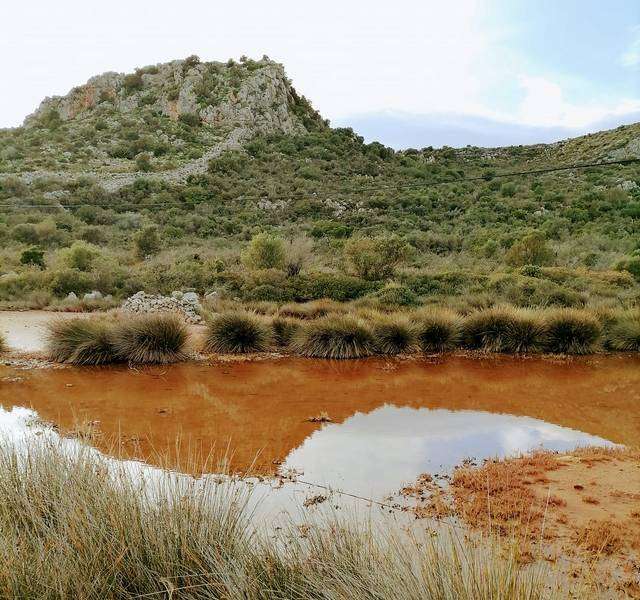
Outside the walls, toward the sea and next to the main road, there was a small lake (Inous) with an opening resembling a bottomless well (Akoulo), which is why this area is still referred to as Akoulo. In ancient times, this site hosted annual festivals and ceremonies, including sacrifices, as noted by Pausanias, in honor of Inous, who, according to mythology, was the stepmother of Phrixus and Helle, attracting large crowds. Participants would throw pasta into the Akoulo (a remnant of an ancient custom observed at the crater of Etna), and if the pasta sank, it was considered a good omen. This has been corroborated by research conducted by French explorers in 1829. Furthermore, this lake contributed to the naming of the city Epidaurus Limiras. According to another version, Limiras derived from a corruption of the word «limena» = Limenira = Limiras.
As one ascends toward the Acropolis, it becomes apparent that there are no signs indicating the presence of houses (unless they were completely destroyed from the foundations), suggesting that the inhabitants lived outside the walls and sought refuge or gathered within the fortress only for protection during times of danger or for personal and religious reasons.
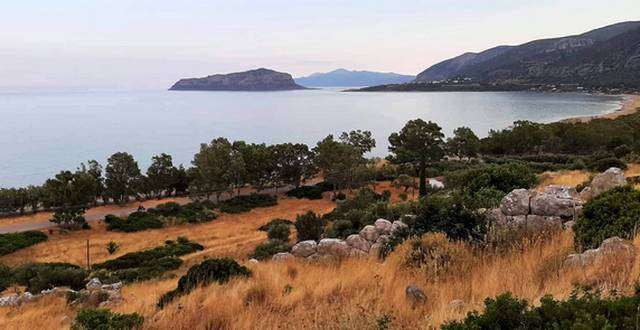
Regrettably, this archaeological site is currently neglected, lacking any signs or information to provide even basic insights into what remains.
The massive stones of the walls stand resolutely, gazing toward the more modern fortress of Monemvasia and the depths of the Myrtoan Sea. Ever proud and unyielding against the passage of time, they reveal to every passerby—be it a traveler or visitor—the remarkable works of ancient wise men—Cyclopes—perhaps wishing to show that behind them lay and protected a different civilization, one that bore no resemblance to our own «modern» society.