
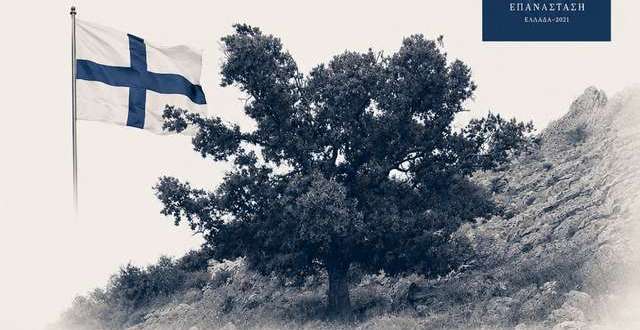
On August 30, 2026, a significant ceremony took place in the region of Eastern Mani, Greece, marking the official inclusion of the Sacred Oak of Polyaravos into the Network of Centenary Trees of the Greek Revolution. This event was part of the celebrations commemorating the 200th anniversary of the victorious Battle of Polyaravos, a pivotal moment in Greek history.
During this historic battle, the local Maniots successfully repelled the numerically superior forces of Ibrahim, inflicting considerable losses and playing a crucial role in thwarting his campaign to subjugate Mani. This victory remains a powerful symbol of Maniot resistance and national dignity, echoing through the generations.
The Network of Centenary Trees is a research initiative launched by the Messinia Culture Institute in 2021, under the auspices of the «Greece 2021» Committee. Currently, the program is a candidate for inclusion as a «Best Practice for Safeguarding Intangible Cultural Heritage» in Greece’s National Inventory of Intangible Cultural Heritage, as part of the relevant UNESCO Convention.
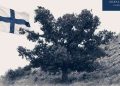
The monumental oak tree, which thrives in the rocky terrain of Polyaravos at an altitude of 844 meters, boasts a trunk circumference of 5 meters and is estimated to be around 400 years old. Its long-standing presence in the Mani landscape imbues the tree with significant historical and symbolic value. The roots, anchored in the rock, and the rugged trunk reflect its unique adaptation to the challenging Mani environment, symbolizing the continuity of the land and collective memory.
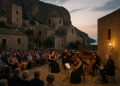
During the ceremony, notable speakers included historian and researcher Ms. Eleni Tzikakou, who presented the historical context of the Battle of Polyaravos, and researcher Mr. Panagiotis Lalousis, who discussed the biological identity and unique characteristics of the ancient oak. A particularly moving moment was the symbolic narration of the «soul of the Sacred Oak,» delivered by Ms. Olivia Panagakou, the vice president of the Mani Cultural Development Association «Elaiophoros.» The event also featured a brief address by Mr. Dimosthenis Kordos, a doctoral candidate in Cultural Studies and founder of the Messinia Culture Institute. The presence of the Sparta Historical Reenactment Society and the Honorary Body of the Municipality of Eastern Mani, dressed in period costumes and armed as during the Greek Revolution, added a unique touch to the proceedings.
This event not only honors the historical significance of the Sacred Oak but also reinforces the cultural heritage of the region, ensuring that the stories of resilience and bravery continue to inspire future generations.