
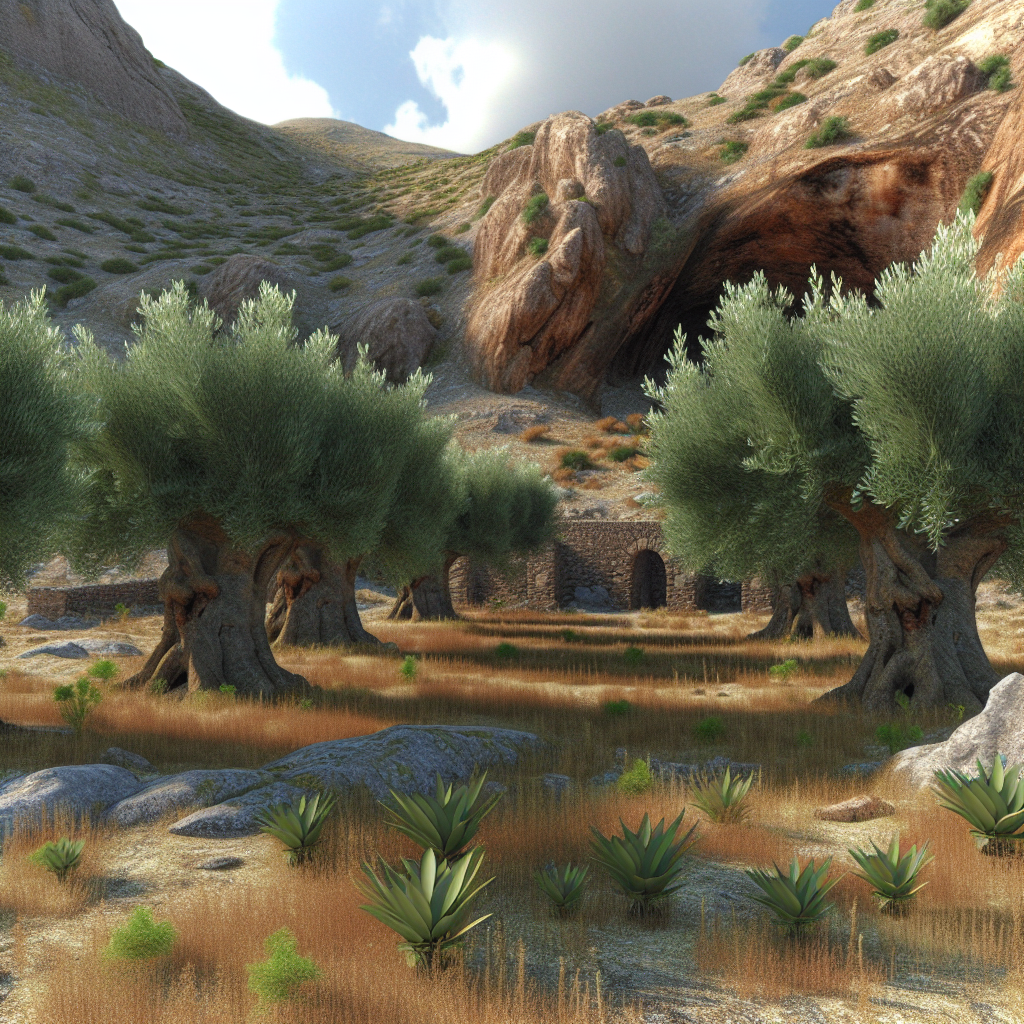
In the northern region of the Municipality of Monemvasia, particularly in areas such as Sykea, Angelona, and Agios Ioannis, one can find a remarkable abundance of ancient olive trees. These trees, some of which are over a thousand years old, are not only a testament to the area’s rich history, dating back to Mycenaean times, but also a vital part of the local ecosystem.
What sets these olive trees apart is not merely their age or size, but their sheer number. For instance, in the location known as «Kalogerina» in Agios Ioannis, there are approximately 30 to 40 ancient olive trees. In Sykea, one can find around 15 to 20, while in Angelona, particularly in areas like «Maragko,» «Gourna,» and «Agios Konstantinos,» the total reaches about 40 to 50 trees. Notably, some of these trees are situated within Natura areas, highlighting their ecological significance.
These olive trees belong to local varieties, often referred to as «Athinoelies» or «Katsouleris» by the residents of Zaraki, and «Asproelies» or «Mourtolies» in certain parts of Laconia. Unfortunately, despite their historical and cultural importance, there has been little effort from official authorities to document, assess, or protect these trees. As a result, many of them are at risk of destruction due to human activities.
Recent discussions have emerged regarding the largest or oldest olive tree in the Peloponnese or even in all of Greece. However, such claims are often speculative, as there is currently no universally accepted scientific method for accurately measuring the size or determining the age of these trees. It is crucial to note that the size of an olive tree does not necessarily correlate with its age. For example, an olive tree in Geraka, growing in barren land that has never been cultivated or irrigated, can grow just as quickly as one in a fertile valley that receives regular care.
It is essential for citizens, organizations, and authorities to shift their focus from grand proclamations to tangible actions that promote the preservation and recognition of the countless natural and cultural monuments that abound in our country, particularly in the Municipality of Monemvasia. The time has come to prioritize the protection of these invaluable olive trees for future generations, ensuring that they remain a living part of our heritage.