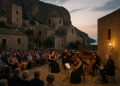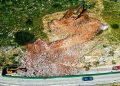

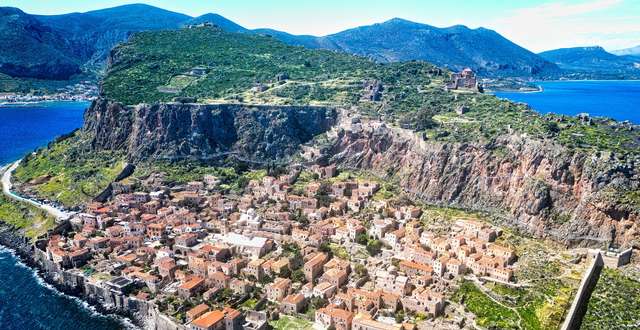
On the night of July 23rd, during the celebration of the Liberation of Monemvasia, the sky above the historic rock illuminated with a dazzling display. Dozens of drones, meticulously synchronized, formed the figure of the renowned poet Yannis Ritsos in the night air. However, as the luminous visage of the poet hovered above the festivities, his gaze appeared to descend toward the earth, fixating on his beloved rock, where a large excavator stood ominously beside his childhood home.
In that moment, a profound silence enveloped the celebration. Ritsos’s own words seemed to resonate through the night sky, echoing over the dark Myrtoan Sea. He lamented the harshness of the landscape, declaring it impervious to commercialization and the ravages of machinery. His poignant reflections questioned the motives behind altering the natural beauty of the land for fleeting vanity.
The poet’s verses conveyed a deep reverence for the historical significance of the rock, emphasizing that it has traversed centuries without the need for artificial enhancements. He urged against the imposition of modernity that seeks to commodify beauty, asserting that true appreciation of the landscape is earned through respect and labor, not through machinery or profit.
As the night unfolded, a figure, the Woman Dressed in Black, cried out in despair, questioning the future of a homeland where even the rocks are subjected to drilling for the sake of progress. She lamented the loss of silence and the ability to connect with history, highlighting a growing disconnection from the past.
Ritsos’s final words resonated powerfully: the rock needs no cable car to reach the sky; it has always existed in its grandeur. He cautioned against wounding the stone that has supported generations, urging a return to reverence for the land.
In a striking contrast, those who advocate for development labeled the defenders of the rock as «lords of darkness» and «frozen minds.» This dichotomy raises critical questions about the true nature of progress. If valuing history and preserving beauty is deemed «darkness,» then the so-called «light» of modernity may merely reflect the arrogance of concrete and construction.
The ongoing dialogue surrounding the preservation of Monemvasia’s heritage is a testament to the enduring relevance of Ritsos’s message. As society grapples with the balance between progress and preservation, the poet’s legacy serves as a reminder that true beauty cannot be bought or manufactured; it must be cherished and respected.
This reflection on the events of July 23rd serves as a poignant reminder of the importance of maintaining a connection to history and the natural world, urging us to consider the implications of our choices on the landscapes that shape our identities.