

As global discussions about the green transition continue, a significant dilemma emerges: should we focus on electric vehicles equipped with heavy batteries that take hours to charge, or invest in hydrogen vehicles that face high fuel production costs?
Recently, Japan has impressed the world by producing synthetic fuels from air and water, albeit with a significant energy loss exceeding 80% of the initial input. However, Greece holds a unique geological advantage that could provide a more efficient and cost-effective solution by leveraging two leading technologies: high-enthalpy geothermal energy from Milos and decentralized green hydrogen production.
### The Key Lies in Low-Cost Base Energy
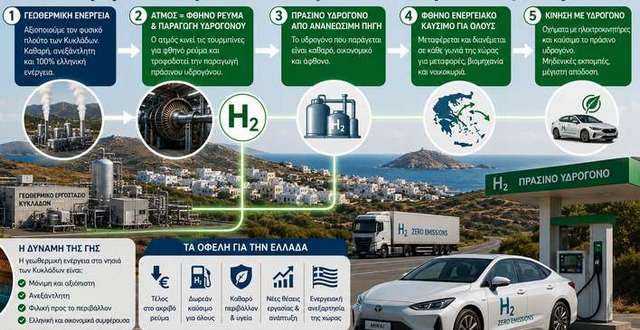
The main challenge facing the global push for green hydrogen is its cost. Splitting water into hydrogen through electrolysis requires enormous amounts of electricity. If this electricity is expensive, the fuel becomes economically unviable. This is where Milos changes the game. The island boasts one of Europe’s richest geothermal fields, with subterranean temperatures exceeding 300°C. The natural steam from the Earth can drive steam turbines, generating clean electricity 24/7, year-round, and at a remarkably low cost.
Thanks to a comprehensive network of high-voltage underwater cables managed by the Independent Power Transmission Operator, this affordable geothermal electricity can now seamlessly flow from the Cyclades to the rest of Greece.
### Decentralized Production: On-Demand Hydrogen Across the Nation
Rather than engaging in the costly and risky transport of ready-made hydrogen using specialized tankers, hydrogen transport can utilize the existing electrical network. The inexpensive electricity from Milos reaches cities and national infrastructures. Local refueling stations are equipped with small electrolysis units powered by this low-cost geothermal electricity, utilizing simple water to generate green hydrogen on-site, effectively eliminating transportation costs.
### Hydrogen Mobility: Refueling in Just Three Minutes
Hydrogen vehicles (FCEVs) function as electric cars but rely on a fuel cell instead of a hefty battery.
– Drivers can refuel their tanks with hydrogen in just 3 to 5 minutes, similar to conventional gasoline refueling.
– The vehicle combines hydrogen with oxygen from the air, generating the electricity needed to power the electric motor.
– The only emission produced is pure water.
### The Next Day for Greece
This model alleviates range anxiety for drivers and is particularly suited for heavy-duty vehicles such as trucks, buses, and ferries, which struggle to operate efficiently with standard batteries. By adopting modern technologies, such as the Italian AMIS system that mitigates odors and environmental impacts at geothermal facilities, Milos can transform into Greece’s «green heart.» The country stands at a golden opportunity to achieve energy independence, powered by fuel generated from the earth’s heat and local water resources.
High-enthalpy geothermal energy, like that found on Milos, serves as the cornerstone of a solution for all of Greece. This geothermal source produces free hot steam that directly feeds into steam turbines generating cost-free electricity, which is then distributed throughout the national grid for use by electric vehicles and beyond.
As this exciting energy transition unfolds, Greece could position itself as a leader in sustainable energy, harnessing its natural resources to foster an eco-friendly future.